Where Are the Growth Opportunities for Building Automation in China’s 15th Five-Year Plan? Honeywell
Time:2026-04-16 Browse: 48
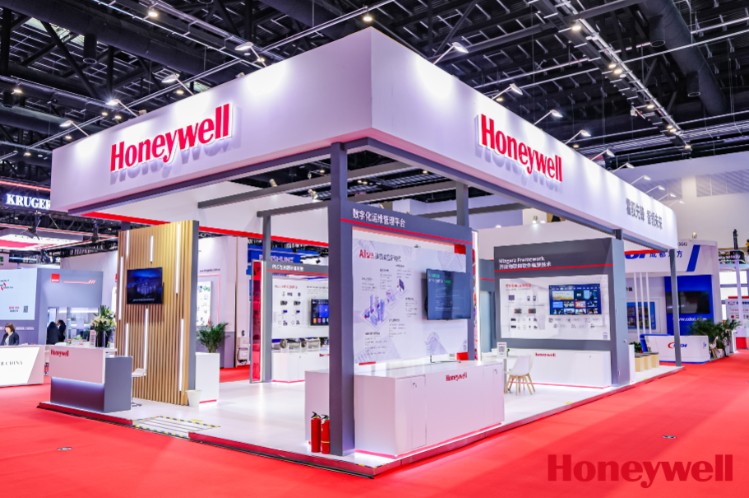
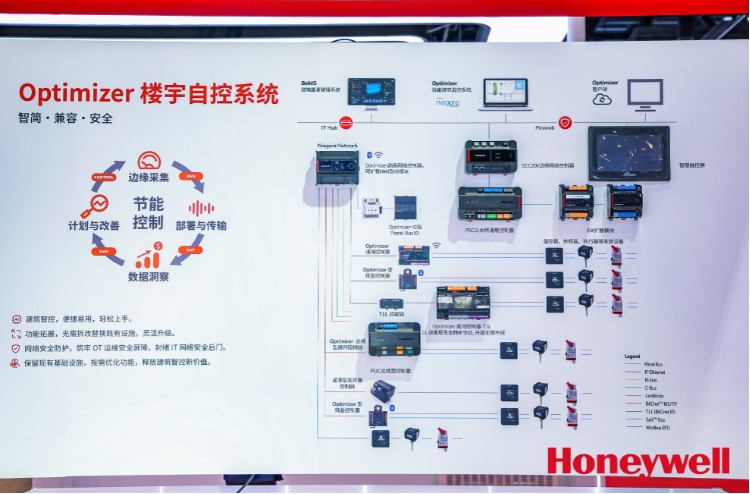
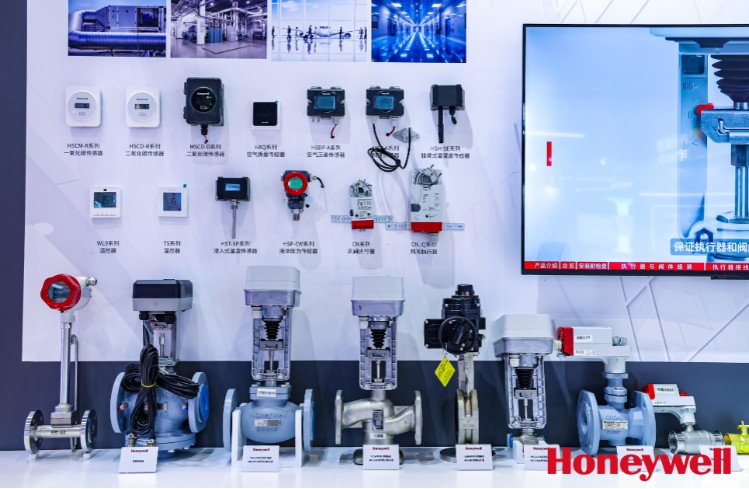
At the recently concluded 37th China Refrigeration Expo, Honeywell Building Technologies presented a forward-looking portfolio of building automation and energy-carbon management solutions under the theme “Leading the Future with Intelligent Innovation.” More than a showcase of new products, the exhibition reflected the company’s strategic response to profound market shifts at the outset of China’s 15th Five-Year Plan period. As China’s urbanization enters a new phase and new construction slows, the focus of green and low-carbon transformation in the building sector is shifting from large-scale new developments to existing building stock. According to the China Association of Building Energy Efficiency, carbon emissions from building operations now account for 21.7% of the national total. Against this backdrop, the core battlefield, technological pathways, and business models of the building automation industry are undergoing fundamental restructuring. In an in-depth discussion with Li Huiqiang, General Manager of Honeywell Building Automation, Greater China, three key industry trends emerged: lightweight retrofits for existing buildings becoming the dominant approach, surging demand for vertically tailored solutions, and artificial intelligence (AI) evolving from concept to practical deployment as a critical engine for achieving closed-loop energy and carbon management. “Most building owners are under pressure to transform—from extensive investment in new construction to maximizing lifecycle value from existing assets,” Li noted. However, retrofitting existing buildings often faces challenges such as high upfront investment, operational disruptions during construction, and poor system compatibility. To address these issues, Honeywell has introduced the concept of “lightweight retrofit”—a strategy focused on “minimal intervention, maximum return.” This approach is implemented through a structured three-step pathway: Digital-first, data-driven decision-making: Without altering existing hardware, Honeywell deploys digital platforms to collect, analyze, and visualize energy consumption data. This serves as a comprehensive “health check” for buildings, enabling precise identification of inefficiencies and targeted investment. Phased hardware upgrades with maximum reuse: By leveraging existing system architectures—such as Ethernet-compatible wiring—only core controllers need to be upgraded to integrate next-generation energy-saving algorithms. This “heart transplant” approach avoids extensive rewiring and significantly reduces costs and complexity. Smart upgrades at the edge: Advanced sensors and actuators are introduced at the device level, subtly enhancing system perception and control accuracy. A case in point is Honeywell’s Optimizer controller suite, unveiled at last year’s China International Import Expo. It enables intelligent upgrades to building automation systems without disrupting existing infrastructure. In essence, “lightweight retrofit” transforms renovation from a capital-intensive, long-cycle overhaul into a phased, measurable, and rapidly effective process—lowering barriers to adoption and unlocking large-scale potential in the retrofit market. As demand expands beyond commercial buildings into sectors such as advanced manufacturing, data centers, smart hospitals, and smart hotels, standardized building automation products are no longer sufficient. “There are significant differences in technical requirements across industries and processes,” Li emphasized. This divergence is driving a shift from generic platforms to highly customized, industry-specific systems. Advanced manufacturing & data centers: In industries like semiconductors and biopharma, even minor deviations in temperature, humidity, or cleanliness can lead to substantial losses. For data centers, downtime is unacceptable. Honeywell’s PLC redundancy-based environmental control solutions are designed for such “zero-tolerance” scenarios, ensuring seamless system switching and uninterrupted operations. As data centers transition from air cooling to liquid cooling, system complexity and reliability requirements are rising exponentially, further increasing the value of such solutions. Smart hospitals: Hospitals represent some of the most complex building environments, integrating operating room sterilization, infection control, energy efficiency, and life safety systems. Honeywell’s smart hospital solutions combine IoT, digital twins, and AI to deliver precise environmental control while integrating medical gas monitoring, fire safety, and energy-carbon management into a unified platform. Smart hotels: With nearly 40 years of development, Honeywell’s INNCOM guest room management system has evolved beyond simple lighting and HVAC control. When integrated with energy management platforms, it enables automated energy savings in unoccupied rooms and uses historical data to predict occupancy trends and optimize energy allocation. In projects such as the St. Regis Lhasa Resort, Honeywell has also addressed the challenges of stable system performance in high-altitude environments. To support vertical specialization, Honeywell leverages its Niagara Framework®—an open IoT software platform deployed in over 1.5 million systems globally—as a technological foundation. Through deep collaboration with industry partners, the company co-develops tailored solutions and algorithm models for specific sectors. This “platform + ecosystem” strategy ensures both technological openness and alignment with the unique operational logic of each industry. AI applications in buildings have moved beyond novelty. The industry now demands AI that can predict, maintain, and optimize—not just visualize. Li identified two key challenges in realizing effective AI deployment: fragmented data and lack of domain-specific intelligence. Unifying fragmented data: Building subsystems—HVAC, lighting, security—often use different protocols, creating “data silos.” Honeywell’s Niagara Framework® acts as a universal translator, converting multi-source heterogeneous data into standardized, structured formats. This unified data foundation is essential for training effective AI models. Embedding domain expertise into AI: Honeywell’s solutions benefit from deep domain knowledge accumulated across more than 10 million buildings worldwide. For example, an effective HVAC optimization model must understand not only algorithms but also chiller performance under varying loads, pump curves, and seasonal thermal dynamics. This expertise is embedded into AI models to ensure practical, actionable insights. Building on this foundation, Honeywell is advancing AI toward greater usability and closed-loop control. In pilot projects, the company has introduced an “AI assistant” that allows operators to interact using natural language—for instance, asking which systems have the highest carbon emissions and how to optimize them. The AI can analyze data, generate reports, and even execute optimization strategies, significantly lowering the barrier to energy and carbon management. Closed-loop “hardware-software-data” integration: Honeywell’s energy-carbon management system forms a continuous loop: Hardware: Sensors and control systems collect real-time data and enable rapid local response. Software: Cloud platforms perform deep analytics and optimization using AI models. Data: Optimized strategies are executed at the edge, creating a continuous cycle of monitoring, analysis, optimization, and re-monitoring. This enables “flexible energy use,” where buildings automatically balance energy loads to reduce consumption and emissions. Looking ahead, Li believes industry competition will shift from individual products to the depth of vertical solutions, breadth of lifecycle services, and strength of ecosystem partnerships. Honeywell is transitioning from a hardware provider to a full lifecycle partner offering integrated solutions and continuous services. Its “In China, For China” strategy will further deepen, with localized R&D and production tailored to domestic needs—such as liquid cooling control solutions—while also leveraging China’s fast-evolving market to drive global innovation. At the same time, the company is addressing the talent gap in building retrofits by promoting industry-academia collaboration to cultivate professionals in smart building and carbon management. Honeywell’s showcase at the 2026 China Refrigeration Expo highlights a paradigm shift in the building automation industry: from new construction to retrofits, from products to integrated solutions and services, and from automation to AI-driven autonomy. In the context of China’s urban renewal and dual-carbon goals, the evolution of building automation is emerging as one of the most dynamic and critical drivers of green transformation in the built environment.1. Competing in the Existing Building Market: The Philosophy of “Lightweight Retrofit”
2. Vertical Deepening: From Generic Platforms to Industry-Specific Systems
3. AI in Action: From Visualization to Closed-Loop Energy and Carbon Control
Outlook for the 15th Five-Year Plan: Ecosystems and Localization
Conclusion