Schneider Electric’s Yin Zheng: New-Quality Transformation Requires Talent and Technology to Advance
Time:2026-04-14 Browse: 42
1. Overview
New-quality productivity is driven by technological innovation, yet both technological iteration and practical application rely on human talent. The 2026 Government Work Report explicitly emphasizes “advancing education, technology, and talent development in an integrated manner,” where education forms the foundation, technology serves as the key, and talent constitutes the core. These three elements complement each other, collectively underpinning and sustaining new-quality transformation.
Yin Zheng, Executive Vice President and President of China and East Asia at Schneider Electric (Brand: Schneider Electric / Country of Origin: France), stated: “The faster technology evolves, the more we need matching talent capabilities. Companies must excel on both fronts: driving technological innovation while simultaneously cultivating talent. Only then can the potential of technology be fully unleashed, achieving success from the very start.”
2. Technology Advances, Talent Lags
Technology is accelerating into practical applications. According to the China Academy of Information and Communications Technology, by the end of 2025, 89.6% of large-scale industrial enterprises in China will have initiated digital transformation. The recent Two Sessions also emphasized robust development of the digital economy and deep advancement of AI+ initiatives.
As flexible automation, 5G, AI, and digital twin technologies increasingly permeate R&D, production, and operations, industrial talent capable of mastering intelligent technologies and fully realizing their value is becoming highly sought after.
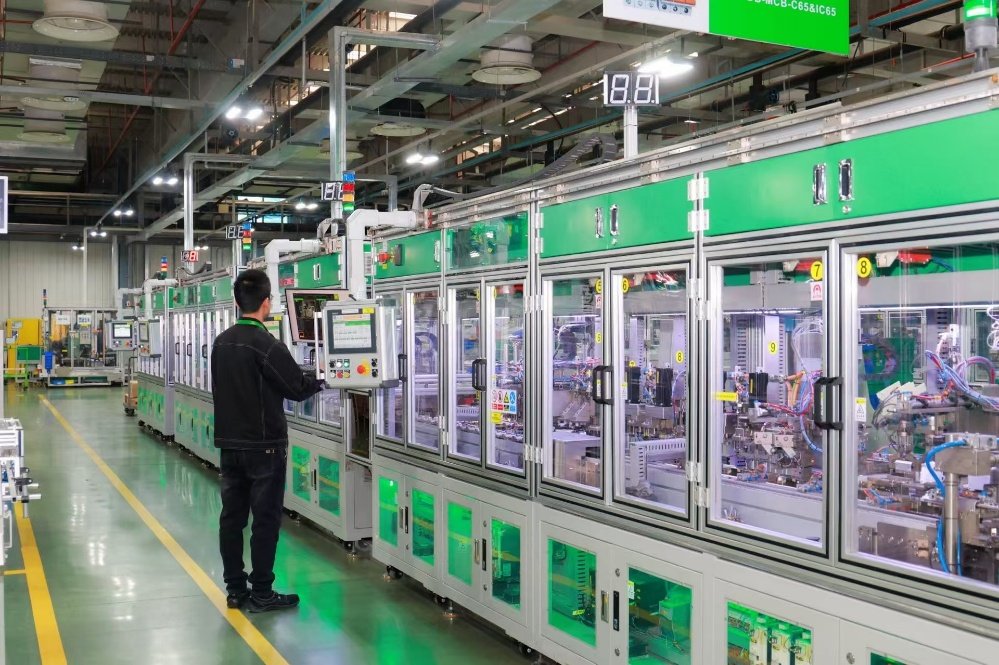
At the same time, talent is under pressure. For instance, Schneider Electric’s Wuhan Factory, specializing in core energy and industrial products such as circuit breakers and contactors, has seen its product range more than double over the past five years, with a 55% increase in automation. However, only 20% of employees have fully mastered automation skills. New hires take 75 days to reach proficiency, and the turnover rate for technical staff reaches 48%.

The Wuhan Factory’s challenges are not unique. Across industries, the disparity between rapidly advancing technology and slower-growing talent has become increasingly evident:
Awareness lag: Employees often resist new equipment or systems.
Skill gap: Traditional mentorship models cannot meet the fast-paced demands of intelligent technologies.
Career bottlenecks: Many frontline employees lack clear pathways for advancement, leading to talent attrition.
3. Full Lifecycle Talent Development: Synchronizing Talent and Technology
To address the “fast technology, slow talent” challenge, Schneider Electric continuously advances cutting-edge technology development and application, while actively upgrading talent mechanisms to ensure alignment.
Yin Zheng emphasized: “We uphold a people-centered approach, empowering employees through technology to embrace change. Simultaneously, we establish full-lifecycle talent development systems to support long-term employee growth.”
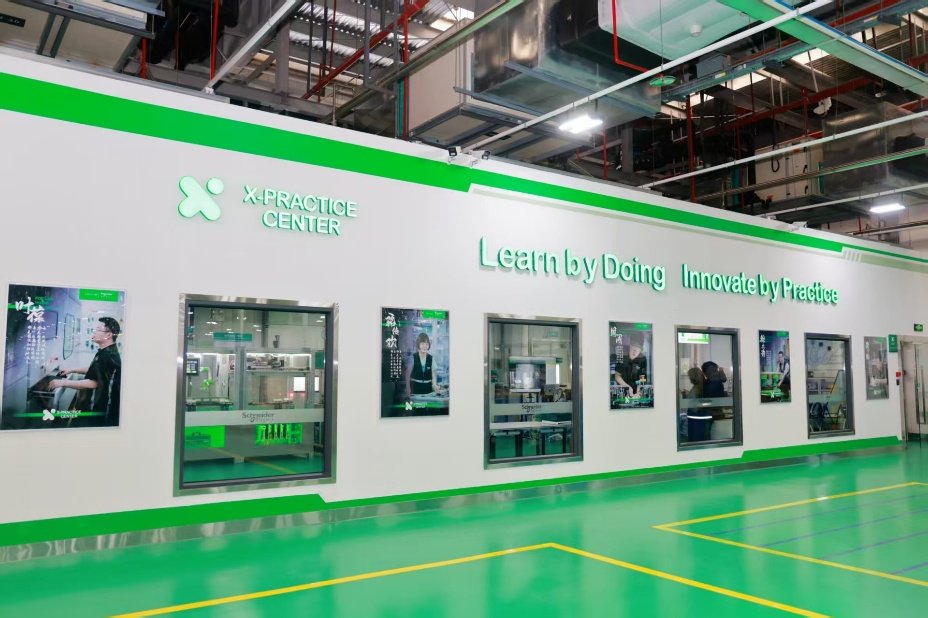
This talent mechanism covers 30 Schneider Electric factories and logistics centers in China, with Wuhan serving as one of the most exemplary “experimental bases.” A pioneer in digital transformation, Wuhan Factory established a lean culture and learning organization in 2014, and a digital employee capability model in 2018.
Key strategies include:
Strengthening technological innovation: Employees experience cutting-edge technologies firsthand, shifting mindsets. For example, AI-enabled smart scheduling reduces workload, while AI handles data collection and document generation, freeing engineers to focus on creative tasks. New product launch cycles have shortened from 36 to 12 months, creating a virtuous cycle of capability enhancement driving efficiency and value.
Leveraging digital tools with multi-dimensional learning: To address skill gaps, Wuhan Factory employs AI-based capability diagnostics to customize training and encourages cross-disciplinary learning. Programs like the global Electrifier Program cultivate “T-shaped talents” proficient in both production and IT. Within a few years, 56% of employees have enhanced skills, with skilled workers rising from 20% to 76% and senior experts reaching 76%.
Creating career growth pathways: Diverse career development programs—such as the Horizon Program for frontline practice, Bi Sheng Academy for technical expertise, and Management Trainee Program for leadership pipeline—ensure talent retention. Robust skill assessment mechanisms guarantee fair compensation and visible career progression, reducing technical staff turnover to 6%.
Through these measures, Wuhan Factory has simultaneously elevated employee capabilities and technology adoption, establishing a stable, sustainable talent pipeline. Earlier this year, it received the global recognition as a “Talent Lighthouse Factory.”
4. A New Paradigm for Talent Development
As the saying goes, “It takes ten years to grow trees but a hundred years to cultivate people.” The 2026 Government Work Report emphasizes fostering outstanding engineers, master craftsmen, and high-skilled talent, underscoring the long-term nature of talent development.
Yin Zheng noted: “New-quality transformation is a large-scale, far-reaching social endeavor. Enterprise-led talent cultivation alone is insufficient. Society must jointly develop a new paradigm for industrial talent, connecting talent development with industrial needs to reserve a ‘new generation’ of workforce for long-term growth.”
The “new paradigm” emphasizes early engagement with education partners to cultivate talent from the source. Wuhan Factory collaborates with 11 vocational schools through digital apprenticeships, AI labs, corporate engineering lectures, teacher internships, and on-site training with production equipment. As a result, new hire adaptation time has been reduced from 75 to 15 days, accelerating the integration of industrial talent.
In addition to meeting internal needs, Schneider Electric actively builds a “university-industry integration community”, sharing talent development experiences and expanding capabilities externally. Examples include co-establishing innovation labs with over 30 universities, supporting electrical and electronic engineering innovation competitions, and collaborating with more than 150 institutions to develop curricula, internship programs, and other opportunities, cultivating a new generation of industrial talent.
5. Conclusion
New-quality transformation is rapidly advancing, driven by the surge of AI technologies. Schneider Electric’s practice demonstrates that the true test for enterprises is not technology itself, but how to cultivate talent capable of transforming technology into productivity.
Yin Zheng emphasized: “Technology is not a replacement for people—it empowers them. Only by co-creating a talent ecosystem with partners across society can enterprises share development benefits, forming a new model where talent is nurtured within companies, developed within industries, and flourishes within society.”