ABB Files Patent for Web-Based Image Rendering in Industrial Process Control Systems
Time:2026-10-20 Browse: 0
ABB Develops a Web-Based Approach to Industrial Image Rendering
ABB Schweiz AG has filed a patent application titled “Image Rendering Using a Web Browser,” describing a method designed to improve how process graphics are displayed in browser-based industrial control systems.
The application focuses on rendering multiple process images within different regions of a single browser display area using a WebAssembly application. According to the patent disclosure, the approach could reduce the time and memory required to display process graphics by avoiding the need to load a separate WebAssembly instance for each image.
The technology is relevant to industrial human-machine interfaces (HMIs), operator workstations, and browser-based process visualization systems, where multiple equipment graphics and live process values must be displayed efficiently.
The corresponding U.S. patent application, filed by ABB Schweiz AG on April 7, 2026, was published on October 8, 2026, under publication number US 20260311385 A1. The Chinese application is identified in the supplied information as CN122925765A. The Chinese publication record should be checked independently before publication.
Why Image Rendering Efficiency Matters in Industrial Automation
Modern process control systems display a wide range of graphical elements, including equipment symbols, tank and pump diagrams, valve representations, instrument faceplates, alarms, and live operating values.
In browser-based visualization architectures, these graphics may be generated from configuration data and updated as process conditions change. An operator may need to switch between different process sections or view several equipment objects within the same interface.
The patent identifies a limitation in conventional approaches that isolate WebAssembly applications in separate HTML iframes. When each new process graphic requires another WebAssembly instance, the browser may need to allocate additional memory and spend extra time loading and initializing the application.
For systems containing many process graphics, these repeated operations can increase resource consumption and affect the responsiveness of the operator interface.
ABB's proposed approach seeks to address this issue by allowing one WebAssembly instance to render multiple images in separate target regions of a shared display area.
How ABB's Proposed Image Rendering Method Works
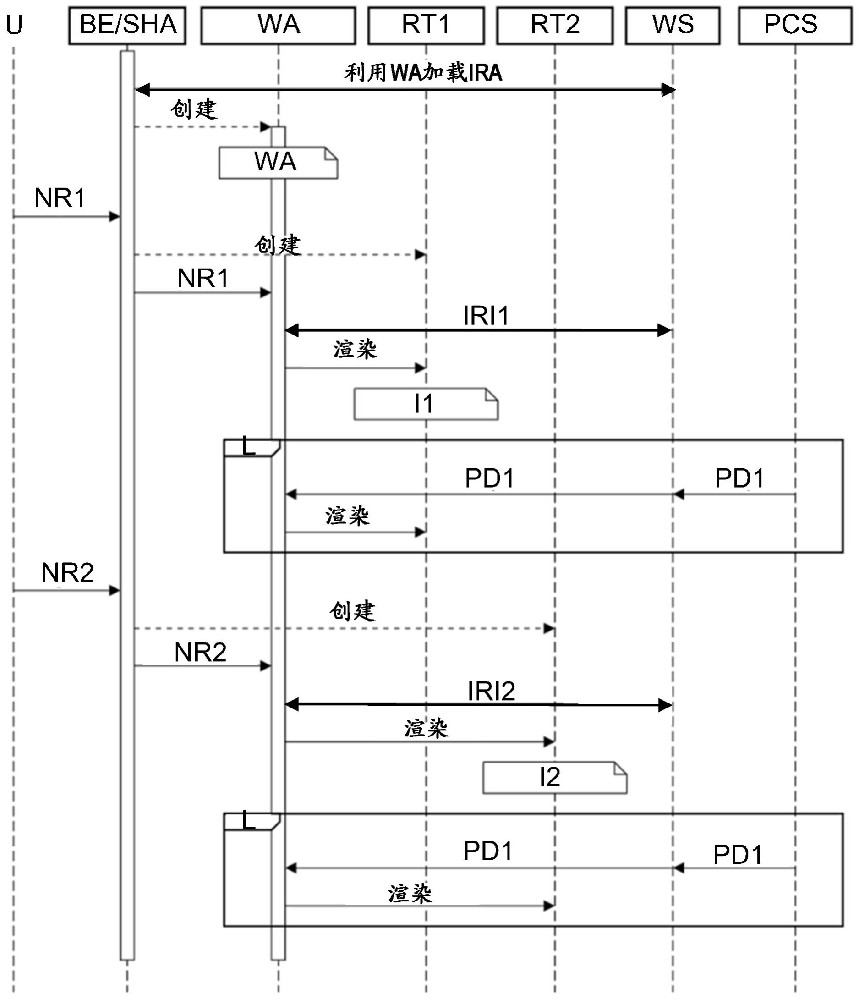
The patent describes a browser-based rendering architecture built around a service hosting application, a WebAssembly component, and a web server.
1. Loading the Web Application
The browser runs a service hosting application that manages the display area and provides the environment in which process graphics are presented. A WebAssembly component is loaded to handle the rendering operations.
The disclosure identifies Microsoft Blazor WebAssembly as one possible implementation of this architecture.
2. Obtaining Image Rendering Instructions
When the first process image is requested, the WebAssembly component connects to the web server and obtains the instructions required to render that image.
These instructions may include graphical drawing information, such as SVG-based content, used to construct the relevant process graphic.
3. Rendering Images in Separate Regions
The first image is rendered in a designated render target region within the display area. When a second image is requested, the same WebAssembly component obtains the corresponding instructions and renders the second image in another region.
The service hosting application manages the separate rendering regions, helping maintain the separation between graphical objects without requiring an entirely new WebAssembly instance for each one.
4. Updating Process Data
The patent also describes obtaining process data associated with individual images and displaying that information alongside the corresponding graphics.
For example, a graphical representation of a pump could be displayed with operating status or process values, while a separate valve graphic could present its own associated information. The rendering component can receive updated process data and refresh the displayed content as required.
This allows graphical objects and their associated process information to be presented within a common browser-based interface.
Potential Benefits for HMI and SCADA Applications
The proposed rendering architecture could offer several benefits for industrial visualization systems.
Lower Memory Consumption
Reusing a WebAssembly instance for multiple graphical objects could reduce the overhead associated with loading and maintaining multiple application instances. The actual memory savings would depend on the number and complexity of the graphics, browser implementation, and application architecture.
Faster Display Initialization
Avoiding repeated WebAssembly initialization may shorten the time required to make additional process graphics available. This could be useful when operators navigate between equipment views or when applications display numerous graphical objects.
More Flexible Browser-Based Visualization
Separating individual render target regions allows different process graphics to coexist within one service-hosted application. This architecture could support more flexible layouts for operator workstations and other browser-enabled devices.
More Efficient Process Data Presentation
The disclosure supports associating process data with individual graphical objects. This can help present equipment status and operating information alongside visual representations of the corresponding process elements.
These benefits are potential outcomes of the proposed architecture, not verified performance benchmarks or evidence of a commercial product release.
Technical Considerations: WebAssembly, SVG and Shadow DOM
The patent discusses several web technologies that help explain the proposed design.
WebAssembly enables compiled code to run inside a compatible web browser. In the disclosed architecture, it provides the execution environment for rendering process graphics.
SVG, or Scalable Vector Graphics, is one possible format for describing graphical elements. It is suitable for many industrial visualization applications because vector graphics can represent equipment symbols, diagrams, and other interface elements.
The disclosure also describes using separate Shadow Document Object Model structures to associate rendered images with their respective target regions. This approach can help isolate the graphical content of individual objects within a shared application.
Together, these technologies provide a potential framework for rendering multiple process graphics without repeatedly instantiating the same application runtime.
What the Patent Could Mean for Industrial Visualization
Browser-based interfaces are increasingly relevant to industrial software because they can provide access to process information across different types of computing devices. However, complex process graphics and continuously updated operating data can place significant demands on browser resources.
ABB's patent explores a software architecture that separates the rendering of individual process graphics from the repeated initialization of their execution environment.
If implemented in commercial systems, this approach could help improve the efficiency of browser-based HMI and process visualization applications, particularly where numerous graphics must be displayed or accessed during normal operations.
For system integrators and industrial software developers, the key engineering consideration is the potential to reuse a rendering component across multiple graphical regions while maintaining the association between each image and its corresponding process data.
The patent application describes a proposed technical solution. It does not, by itself, establish that the method has been deployed in a specific ABB product or that a particular level of performance improvement has been achieved.