ABB Files Patent for Executing Custom Logic Inside OPC UA Servers
Time:2026-10-19 Browse: 0
ABB Explores Dynamic Custom Logic Execution for OPC UA Servers
ABB Schweiz AG has filed a patent application titled “Execution of Custom Logic in an Open Platform Communication Unified Architecture (OPC UA) Server,” outlining a method for loading and executing client-provided logic within an OPC UA server. The technology is designed to make industrial communication systems more adaptable while reducing the need to rebuild or restart server software when application logic changes.
The patent disclosure describes a computer-implemented process in which an OPC UA client provides custom code and associated metadata to a server. The server then identifies the corresponding OPC UA method and invokes it within an execution environment.
The approach addresses a practical challenge in industrial automation: adapting server-side functionality to changing application requirements without repeatedly modifying the underlying server implementation.
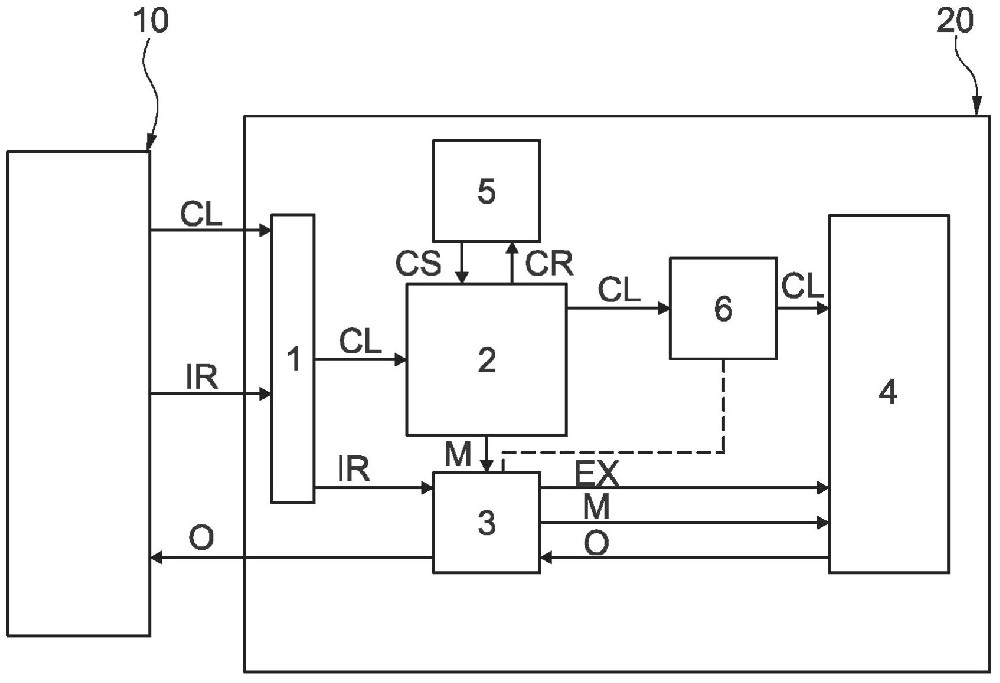
How the Proposed OPC UA Technology Works
According to the patent description, the process consists of three main stages.
1. Receiving Custom Code and Metadata
An OPC UA client submits custom logic through the server's input interface. The submitted package includes executable code and metadata defining the logic's inputs and outputs. Depending on the implementation, the metadata may also specify method names, parameter signatures, access permissions, and execution requirements.
2. Creating an OPC UA Method
A code loader processes the submitted logic and determines the corresponding OPC UA method. The server can check whether the logic is compatible with its address space before registering it for use.
This mechanism allows application-specific functionality to be exposed through the server's existing OPC UA interface rather than requiring every new function to be built directly into the original server software.
3. Executing the Logic at Runtime
An invocation unit calls the generated OPC UA method, allowing an execution environment to run the custom logic. The patent also describes a sandboxed execution environment and security-related checks intended to help control how custom code operates.
The proposed workflow separates the loading of application logic from the core implementation of the OPC UA server. This could make it easier to introduce or update selected functions as application requirements evolve.
Potential Benefits for Industrial Automation
If implemented effectively, the proposed method could offer several practical advantages for industrial communication architectures.
Reduced server redeployment requirements
In conventional implementations, changes to server-side functionality may require software modifications, rebuilding, and redeployment. Dynamically loading custom logic could reduce the need for these steps when adding supported application functions.
Greater flexibility in system integration
Industrial facilities frequently combine PLCs, sensors, data acquisition systems, supervisory control and data acquisition (SCADA) platforms, and manufacturing execution systems (MES). Client-defined logic could help adapt data processing and information structures to different integration requirements.
Local data processing
The patent description identifies use cases such as calculating formulas from multiple sensor readings and preprocessing data before transmission. Executing these operations within an OPC UA server could help reduce unnecessary data exchanges in suitable architectures, although actual performance gains would depend on the workload and implementation.
Support for evolving information models
The disclosure also discusses mapping server address-space data into predefined structures, including structures associated with OPC UA companion specifications. This could help existing systems adapt to new information-model requirements without redesigning every component.
These are potential engineering benefits described or implied by the patent, rather than independently demonstrated performance results.
Security and Reliability Remain Key Considerations
Allowing client-provided code to execute inside an industrial server introduces important security and operational considerations. A flexible execution model must account for code validation, authorization, resource limits, access to sensitive data, and the isolation of custom logic from critical server functions.
The patent describes compatibility checks, a sandboxed execution environment, and security-related validation mechanisms. These features are relevant to limiting the risks associated with dynamically loaded code, but their effectiveness would depend on the final implementation and deployment configuration.
Industrial operators would also need to evaluate execution latency, resource consumption, failure handling, and recovery behavior before introducing such functionality into production systems. The patent application alone does not establish that the technology has been commercially deployed or validated for safety-critical applications.
What This Means for the Industrial Automation Industry
OPC UA is widely used to exchange structured industrial data between automation equipment and higher-level software systems. As factories adopt more connected architectures, the ability to adapt data processing and information models without extensive software redevelopment is an important engineering consideration.
ABB's proposed approach explores one way to extend OPC UA server functionality through dynamically loaded client logic. If realized in commercial products, this type of architecture could provide system integrators and industrial software developers with additional flexibility when adapting communication services to changing operational requirements.
However, the patent filing should be understood as a disclosure of a proposed technical approach, not confirmation that a particular ABB product already supports the described functionality.
For engineers and automation system integrators, the key point is the potential separation of application-specific logic from the core OPC UA server implementation. This may become increasingly relevant as industrial systems require more flexible data processing, interoperability, and software maintenance strategies.