Yokogawa Wins Automation Contracts for the World's Largest Liquefied Hydrogen Carrier and Hydro
Time:2026-10-14 Browse: 0
Yokogawa Secures Major Marine Automation Orders for Hydrogen Vessels
Yokogawa Electric Corporation announced on September 14, 2026, that it had received orders from Kawasaki Heavy Industries to supply integrated automation systems for a 40,000 m³ liquefied hydrogen carrier and two hydrogen-fueled vessels.
The planned liquefied hydrogen carrier will be the world's largest vessel of its type. The project represents an important development in marine automation and the infrastructure required to transport hydrogen safely at commercial scale.
As industries explore alternative energy sources, hydrogen is attracting attention as a potential energy carrier for applications ranging from industrial production to transportation and power generation. However, the development of a hydrogen economy depends on more than hydrogen production alone. Storage, transportation, fuel handling, and operational safety are equally important.
Yokogawa's role in these projects focuses on integrated monitoring and control systems. For the liquefied hydrogen carrier, the system will monitor and control onboard equipment and incorporate emergency shutdown functions. The company will also supply automation systems for marine hydrogen fuel systems installed on two hydrogen-fueled vessels.
These projects demonstrate how industrial control technologies are being applied beyond conventional factories and process plants. The same fundamental requirements—reliable measurement, coordinated control, equipment monitoring, and carefully designed safety functions—are essential in complex marine environments.
For professionals working with PLCs, DCS platforms, instrumentation, and industrial control equipment, the announcement offers insight into the growing relationship between automation engineering and emerging energy infrastructure.
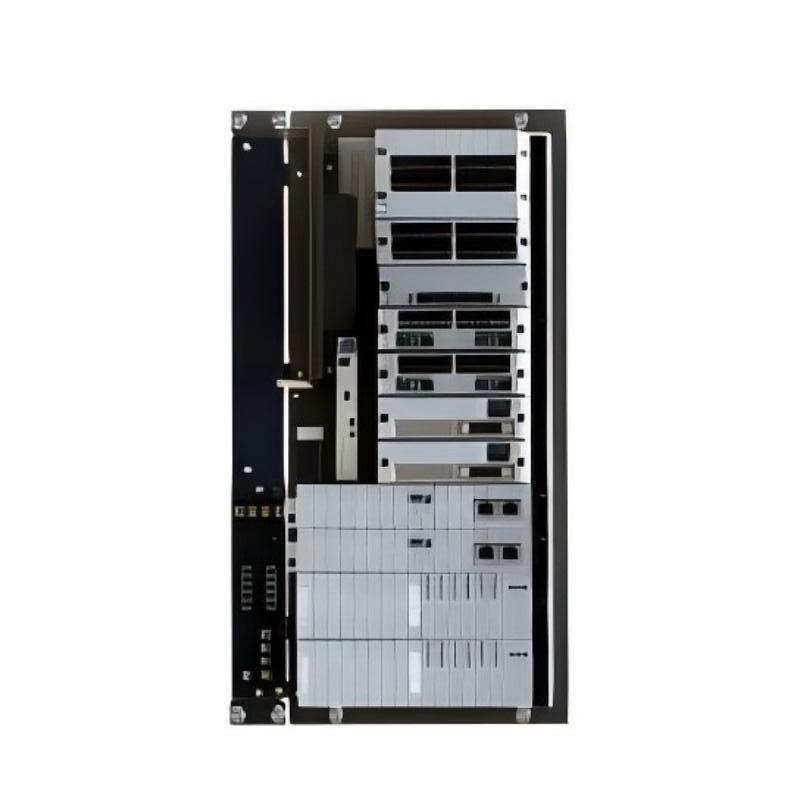
A 40,000 m³ Liquefied Hydrogen Carrier: Why Automation Matters
Liquefied hydrogen presents demanding engineering challenges because hydrogen must be maintained at extremely low temperatures to remain in liquid form under the relevant storage conditions.
Transporting large quantities of liquefied hydrogen therefore requires specialized containment systems, thermal management, monitoring equipment, and carefully coordinated operating procedures.
A vessel designed for this purpose must manage multiple interconnected systems. Depending on the ship's configuration, these may include cargo storage, temperature and pressure monitoring, transfer equipment, supporting utilities, and safety-related functions.
Automation helps operators observe the condition of equipment and coordinate operating activities through a centralized interface.
Yokogawa's announced system will provide integrated monitoring and control of onboard equipment and incorporate emergency shutdown functions to support safe and reliable vessel operations.
This integration is important because individual equipment systems cannot always be managed effectively in isolation. Operators need access to relevant information, clear alarm indications, and defined responses to abnormal operating conditions.
A well-engineered automation system can help organize these functions and provide a more consistent operational view.
However, automation does not eliminate the physical risks associated with handling cryogenic hydrogen. Safe operation also depends on equipment design, appropriate materials, containment integrity, ventilation, detection systems where required, operating procedures, crew training, and compliance with applicable maritime requirements.
The actual safety performance of the vessel will depend on the complete engineering and operating arrangement rather than on the control system alone.
What Is an Integrated Automation System?
An integrated automation system coordinates monitoring and control functions across multiple equipment groups within a facility or vessel.
In industrial applications, such a system may combine controllers, distributed I/O, sensors, actuators, communication networks, operator interfaces, and engineering tools. The precise configuration depends on the process and the required level of integration.
The principal objective is to provide operators with reliable information and allow authorized control functions to operate according to defined requirements.
For a hydrogen carrier, monitoring requirements can include equipment status and relevant process conditions associated with cargo handling and supporting systems. The system must also support appropriate responses when abnormal conditions occur.
A centralized operator interface can make it easier to understand equipment status and identify alarms. Integrated control can also help coordinate operations that involve several related subsystems.
Nevertheless, the term integrated automation system should not automatically be interpreted as a single DCS controlling every function on the vessel. The final architecture may contain separate control systems, dedicated safety equipment, and subsystem-specific controllers connected through defined interfaces.
The engineering design must establish the boundaries between these systems and verify their behavior under normal and abnormal operating conditions.
The Role of PLCs and DCS Technologies in Marine Automation
PLC and DCS technologies provide different but complementary capabilities in industrial control.
PLCs are commonly used for equipment-level control, sequential operations, interlocking, and applications that require predictable responses to inputs. They are widely applied in pumps, compressors, material handling, packaging equipment, and other machinery.
DCS platforms are typically associated with process-wide monitoring and control, where numerous interacting variables and control loops must be coordinated.
Marine automation can involve both centralized monitoring and specialized equipment-level control. The appropriate design depends on the vessel, the machinery, the process requirements, and the relevant safety standards.
For example, a subsystem may use dedicated controllers to manage its equipment, while an integrated system provides operators with a broader view of operational conditions.
Communication between systems must be carefully engineered. Data exchange should be reliable, relevant alarms should be presented clearly, and the loss of a communication link should produce a response appropriate to the function involved.
Safety-related functions require particular attention. An emergency shutdown function must be designed, implemented, and verified according to the applicable safety requirements. It should not be assumed that ordinary PLC logic or a general-purpose supervisory interface is sufficient for every safety application.
Yokogawa's announcement identifies emergency shutdown functionality as part of the system for the liquefied hydrogen carrier. The detailed implementation must be understood within the complete vessel design.
Emergency Shutdown and Operational Reliability
Emergency shutdown functions are important in industrial environments where abnormal conditions may create unacceptable risks.
An emergency shutdown system is designed to move specified equipment or processes into a defined safe state when predetermined conditions are detected or a shutdown is initiated.
The required response depends on the hazard being addressed. A shutdown sequence for cargo-handling equipment may differ from the response required for a fuel supply subsystem or another part of a vessel.
Engineering teams must determine which conditions require action, what equipment must respond, how the shutdown sequence is executed, and how the system behaves if communication or power is lost.
The design may also require defined reset conditions, event records, operator indications, and periodic functional testing.
Operational reliability depends on more than the initial installation. Maintenance teams must have access to appropriate documentation, spare parts, test procedures, and technical support throughout the system's lifecycle.
Integrated monitoring can support maintenance by helping operators identify abnormal equipment conditions and review operational events. However, the actual diagnostic capabilities depend on the installed instruments, controller configuration, and software.
The objective is to create a system that supports dependable operations while preserving the independence and integrity of functions that require separate protection.
Automation for Hydrogen-Fueled Vessels
In addition to the liquefied hydrogen carrier, Yokogawa has received orders for integrated automation systems serving the marine hydrogen fuel systems of two hydrogen-fueled vessels.
A marine hydrogen fuel system includes liquefied hydrogen tanks and fuel supply equipment. It is a key part of the technology needed to use hydrogen as a marine fuel.
Such systems require coordinated management of fuel storage and delivery, along with appropriate monitoring and safety measures.
Automation can help operators supervise equipment conditions and manage control functions according to the vessel's operating requirements.
The system architecture must account for the characteristics of hydrogen, the requirements of the fuel-consuming equipment, and the interactions between fuel supply and other vessel systems.
The two vessels are being built as part of a Green Innovation Fund project led by Japan's New Energy and Industrial Technology Development Organization, known as NEDO.
The project supports efforts to establish the technology and infrastructure needed for large-scale maritime hydrogen transportation and use.
Although the application is specialized, many of its engineering principles are familiar to industrial automation professionals: accurate instrumentation, dependable control, clear alarm management, well-defined system interfaces, and carefully verified safety functions.
Why Hydrogen Transportation Is Important for Industrial Energy Infrastructure
Hydrogen production and use are only parts of a larger supply chain.
Hydrogen may need to move between production facilities, storage locations, ports, industrial users, and other destinations. The economics and feasibility of these operations depend on factors such as production methods, energy requirements, storage technology, transportation infrastructure, and end-user demand.
Liquefied hydrogen is one potential option for transporting hydrogen in large quantities. It requires specialized cryogenic handling because of the extremely low temperatures involved.
Developing reliable transport systems can help connect hydrogen production with markets that are not located near the source.
However, a new vessel or automation contract does not, by itself, establish that a complete commercial hydrogen supply chain is already operating at scale. Infrastructure development also depends on terminals, storage facilities, logistics, regulations, and the availability of suitable production capacity.
Yokogawa's orders illustrate one part of this wider development: the control and monitoring technology required to support hydrogen transportation and marine fuel systems.
For automation suppliers, this creates potential applications in process control, instrumentation, safety systems, and industrial data management.
What This Means for Industrial Automation Equipment Buyers
Projects involving complex marine and energy infrastructure highlight the importance of selecting control equipment according to its intended application.
PLCs, I/O modules, communication equipment, sensors, and control-system components must be compatible with the relevant hardware and software architecture.
For replacement and maintenance projects, buyers should verify the complete part number, hardware revision, firmware requirements, communication interfaces, and applicable manufacturer documentation.
They should also establish whether the equipment is intended for marine use and whether the installation requires specific environmental, electrical, or certification characteristics.
A module suitable for a conventional industrial cabinet should not automatically be assumed to meet the requirements of a marine installation.
For critical applications, engineering teams must confirm compatibility and suitability before installing replacement hardware. The selection process should consider the complete system, including wiring, configuration, communications, safety requirements, and maintenance procedures.
Industrial distributors and spare parts suppliers can support procurement by providing accurate identification information and transparent product-condition details. However, the final approval for use in a critical control system belongs to the responsible engineering organization.
Cybersecurity and Lifecycle Support in Marine Automation
As industrial and marine control systems become more connected, cybersecurity must be considered alongside operational reliability.
Control networks may exchange information with monitoring systems, maintenance tools, and other onboard applications. Each connection should be assessed according to its purpose and the potential consequences of unauthorized access.
Appropriate measures can include network segmentation, controlled engineering access, authentication, configuration management, software maintenance, and tested recovery procedures.
The specific requirements depend on the vessel's architecture, applicable standards, and operating arrangements.
Lifecycle support is equally important. Marine equipment may remain in service for many years, making documentation, maintenance planning, spare parts availability, and technical support essential considerations.
A control system should be designed and maintained with the expectation that components may eventually require repair, replacement, or upgrades.
Before introducing a replacement component, engineers should confirm that the new device is suitable for the installed configuration and that any required testing has been completed.
These practices help protect the long-term reliability of complex automation installations.
Conclusion
Yokogawa's September 14, 2026, announcement of automation orders from Kawasaki Heavy Industries highlights the expanding role of industrial control technology in hydrogen transportation and marine decarbonization.
The orders cover integrated automation systems for a 40,000 m³ liquefied hydrogen carrier and two hydrogen-fueled vessels. The announced scope includes onboard monitoring and control, emergency shutdown functionality for the carrier, and automation for marine hydrogen fuel systems.
For PLC, DCS, and industrial automation professionals, the project demonstrates how established control engineering principles can be applied to emerging energy applications.
Reliable instrumentation, coordinated monitoring, appropriate safety functions, dependable communication, and lifecycle maintenance remain essential regardless of whether the application is a process plant, a power facility, or a specialized vessel.
As hydrogen infrastructure develops, automation will remain an important part of the systems required to manage storage, transportation, and fuel handling safely and reliably.