Allen-Bradley MPL-A430H-HJ72AA Servo Motor Troubleshooting Guide
Time:2026-09-01 Browse: 15
Allen-Bradley MPL-A430H-HJ72AA servo motor faults are not always caused by a failed motor. A motor that trips during acceleration, loses position, or produces abnormal vibration can be affected by encoder feedback, mechanical loading, tuning, cable connections, or drive configuration. Fault Diagnosis should therefore begin with the operating condition and measured behavior rather than immediately replacing the motor.
MPL-A430H-HJ72AA Servo Motor Overcurrent Fault Symptoms
A common field symptom is an overcurrent or torque-related fault appearing when the axis starts moving.
The important distinction is whether the fault occurs immediately at enable or only when the motor is accelerating.
If the fault appears immediately, inspect motor power connections, phase wiring, drive configuration, and possible motor winding problems.
If the motor enables normally and faults only during acceleration, mechanical resistance becomes more important. A seized bearing, excessive load, incorrect acceleration parameters, or a mechanically restricted coupling can demand substantially more torque.
The MPL-A430H-HJ72AA is a low-inertia motor, so aggressive motion settings can produce rapid current changes. Published data lists approximately 12.2 A continuous stall current and a substantially higher peak current capability, meaning the drive should be configured according to the actual motor data rather than using generic servo parameters.
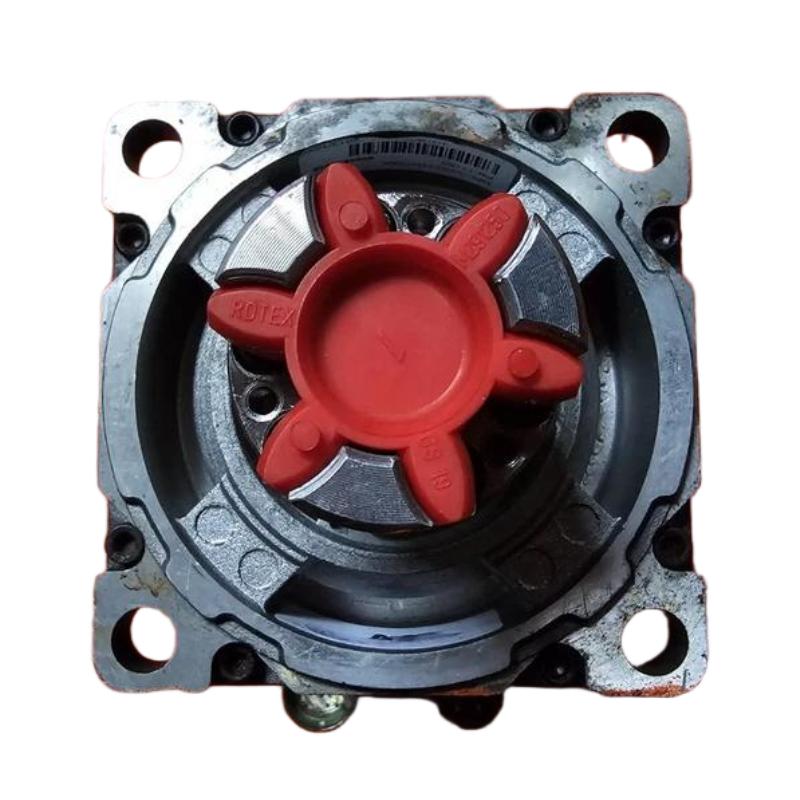
MPL-A430H-HJ72AA Fault Diagnosis: Separate Electrical and Mechanical Causes
The most useful troubleshooting question is:
Does the problem exist with the machine mechanically unloaded?
If the motor runs correctly with the coupling disconnected but faults after the machine is connected, the motor itself becomes a less likely root cause.
Check the following conditions:
Mechanical binding can increase torque demand.
A misaligned coupling can create radial or axial loading.
A brake configuration mismatch can prevent normal movement, although the MPL-A430H-HJ72AA itself is specified without a brake.
Incorrect motor parameters can cause abnormal current demand.
A damaged motor cable can create intermittent phase faults.
This separation saves considerable troubleshooting time. Replacing a servo motor before isolating the mechanical load can simply move the same fault to the replacement unit.
MPL-A430H-HJ72AA Encoder Feedback Fault Investigation
Another failure pattern is a feedback fault that appears after the servo is enabled.
The MPL-A430H-HJ72AA uses a 2000-line incremental encoder.
Start with the connector rather than the encoder electronics.
Inspect the SpeedTEC DIN connector for incomplete insertion, damaged contacts, contamination, or cable strain. Follow the feedback cable back toward the cabinet and look for sharp bends, crushed sections, or routing alongside high-current switching cables.
If the drive reports a feedback error while the motor is stationary, an open circuit or connection problem is more plausible than a mechanical alignment problem.
If feedback is stable while stationary but becomes unreliable only during motion, cable movement, electrical interference, or vibration should receive more attention.
This distinction is useful because an encoder that works on the bench but fails when the motor moves may not actually have an internal encoder failure.
MPL-A430H-HJ72AA Position Error During Motion
Position error is another fault pattern that requires more than checking the motor.
Suppose the commanded position is reached slowly, but the axis develops following error during rapid acceleration. The diagnostic process should compare commanded motion, actual position feedback, motor current, and mechanical response.
If current rises sharply while actual position falls behind, excessive load or aggressive acceleration is a strong possibility.
If current remains relatively normal but the feedback signal becomes unstable, investigate the encoder circuit and cable.
If the feedback remains clean while the mechanical output does not track the motor shaft, inspect the coupling, gearbox, belt, screw, or other transmission components.
The motor should not be treated as an isolated component. Servo Troubleshooting works best when the entire motion chain is considered.
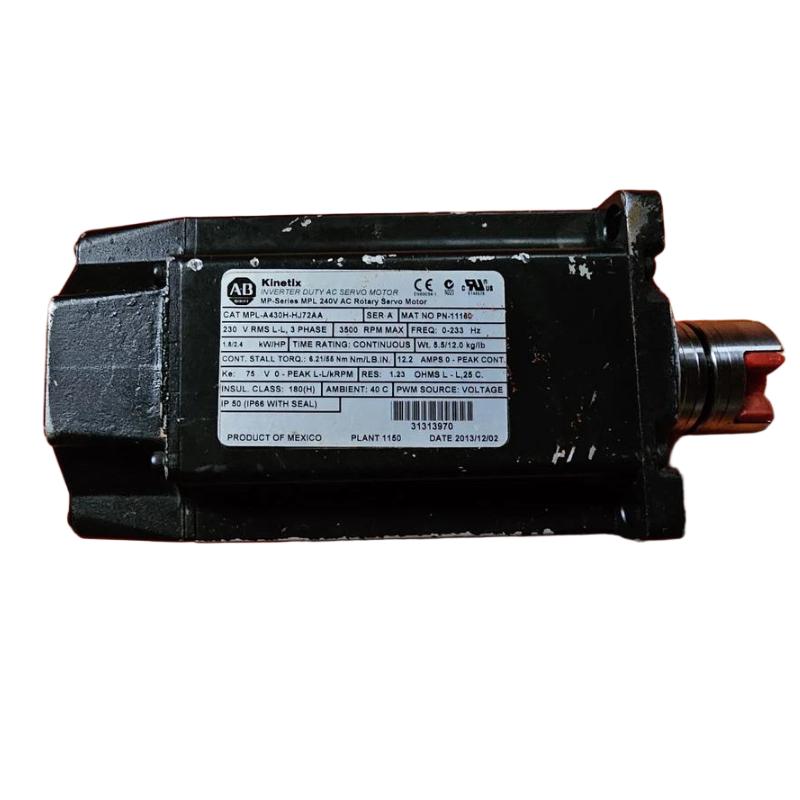
MPL-A430H-HJ72AA Abnormal Vibration Fault Diagnosis
A vibration complaint can be particularly misleading.
The motor may sound normal at low speed and become noisy at a specific speed range. That pattern often suggests mechanical resonance or tuning interaction rather than an immediate motor failure.
In one field troubleshooting case, an MP-Series servo showed noticeable vibration only during a narrow acceleration range. The encoder feedback was stable and the motor current was within the expected operating range. Instead of replacing the motor, the engineer checked the coupling and reduced the acceleration profile.
The vibration disappeared after the mechanical alignment was corrected.
A useful troubleshooting rule is to record when the vibration occurs. A vibration that follows motor speed is different from one that appears only under load, and both are different from vibration that occurs only during acceleration or deceleration.
MPL-A430H-HJ72AA Servo Motor Does Not Rotate
If the drive appears ready but the MPL-A430H-HJ72AA does not rotate, check the enable chain first.
Confirm that the drive is actually receiving the run or enable command. Then verify that no safety circuit, limit condition, inhibit, or motion command restriction is preventing operation.
Next, check the motor power connection and feedback status.
If the drive immediately reports a feedback fault, concentrate on the encoder circuit.
If the drive reports an overcurrent condition when motion is commanded, investigate motor phases and mechanical resistance.
If there is no fault but the commanded position remains unchanged, inspect the motion command path and System Configuration before replacing hardware.
This diagnostic order prevents a control-system problem from being incorrectly classified as a servo motor failure.
Allen-Bradley MPL-A430H-HJ72AA Repair Decision
The MPL-A430H-HJ72AA is listed by Rockwell Automation as discontinued as of July 23, 2024, with MPL-A430H-SJ72AA identified as an engineering replacement.
For an installed machine, however, replacement is not automatically the first choice.
If the motor has a repeatable winding, encoder, or bearing problem, repair or replacement may be appropriate. If the fault is caused by wiring, tuning, mechanical alignment, or drive configuration, changing the motor will not solve the underlying issue.
For a replacement decision, record the original motor catalog number, encoder arrangement, connector configuration, shaft characteristics, mounting dimensions, and machine application before selecting an alternative.
Long-Tail Keywords for MPL-A430H-HJ72AA Troubleshooting
Useful search phrases include Allen-Bradley MPL-A430H-HJ72AA troubleshooting, MPL-A430H-HJ72AA fault diagnosis, MPL-A430H-HJ72AA servo motor fault, MPL-A430H-HJ72AA encoder fault, MPL-A430H-HJ72AA overcurrent fault, Allen-Bradley MP-Series servo motor repair, and MPL-A430H-HJ72AA position error troubleshooting.
For field maintenance, these keywords correspond closely to the actual symptoms engineers encounter: motor not rotating, feedback fault, excessive current, abnormal vibration, following error, and intermittent servo trips.